Protein and Healthy Hair: Understanding the Connection
Understanding the connection between protein and healthy hair, nutrition, and everyday hair care for healthier-looking hair.
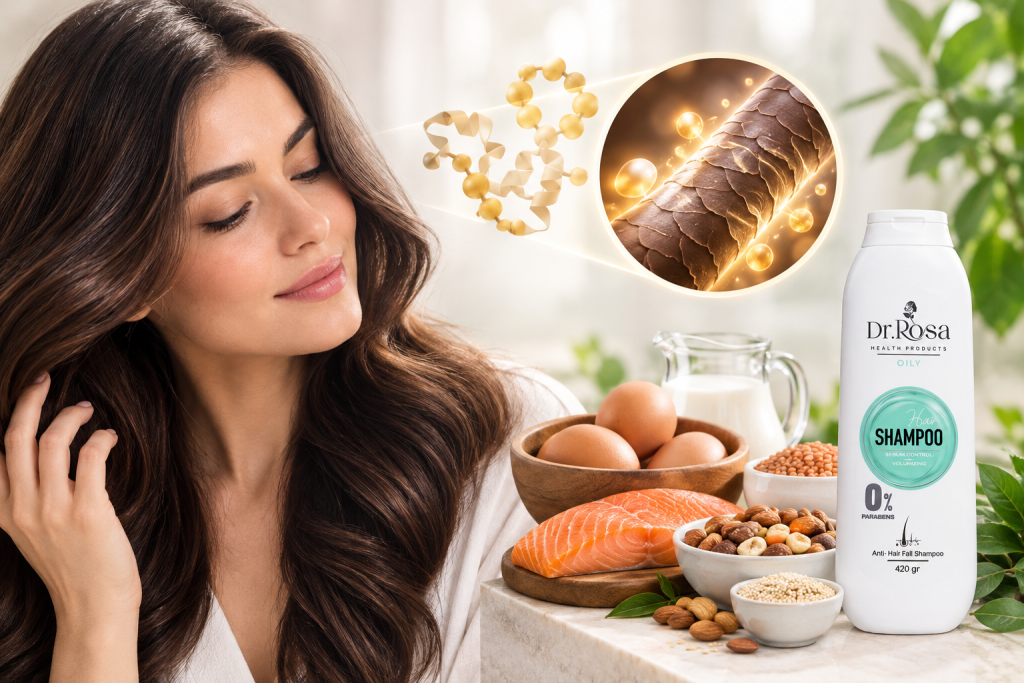
Protein and healthy hair are closely connected through nutrition, keratin production, and overall hair health. While protein is not the only factor that affects the condition of your hair, getting enough high-quality protein can help support stronger, healthier-looking hair.
Understanding the role of nutrition, protein intake, and everyday hair care can help you make better choices for maintaining healthy-looking hair.
Hair health is influenced by many factors, including diet, lifestyle, genetics, hormonal changes, and daily care habits. A balanced approach can help support the natural structure and appearance of the hair over time.
Protein provides amino acids that the body uses to build and maintain tissues, including the keratin that forms much of the hair shaft. Consistent nutritional support is therefore an important part of maintaining strong and healthy-looking hair.
Why Protein and Healthy Hair Are Connected
The relationship between protein and healthy hair begins with the structure of the hair itself. Hair is primarily composed of keratin, and the body needs amino acids from dietary protein to produce this structural protein.
The Role of Keratin in Hair Health
When considering protein and healthy hair, keratin is one of the most important factors to understand. Keratin gives the hair shaft much of its structure, strength, and resilience. Dietary protein provides amino acids that the body can use to produce keratin and other proteins.
Keratin is a structural protein that gives hair much of its strength and shape. The body needs amino acids from dietary protein to produce keratin, which makes adequate nutrition an important part of supporting strong, healthy-looking hair.
How Protein Supports the Hair Growth Cycle
The connection between protein and healthy hair also relates to the activity of hair follicles. Hair follicles continuously move through different stages of growth, transition, and resting or shedding.
Adequate nutrition, including sufficient protein, helps support normal physiological processes. However, protein should not be considered a treatment for every form of hair loss.
Can Protein Deficiency Affect Healthy Hair?
Understanding protein and healthy hair also means understanding what can happen when the body does not receive adequate nutrition. Significant dietary restriction, rapid weight loss, or severe nutritional deficiencies can sometimes be associated with increased hair shedding.
The American Academy of Dermatology identifies inadequate protein intake among nutritional factors that may contribute to hair loss. American Academy of Dermatology – Causes of Hair Loss
Protein Intake During Weight Loss
The relationship between protein and healthy hair can become particularly relevant during periods of rapid weight loss. Highly restrictive diets may reduce protein, calories, vitamins, and minerals at the same time.
A sustainable approach to weight management should therefore provide adequate nutrition rather than relying on severe dietary restriction.
Protein Sources for Healthy Hair
Different foods can contribute to the nutritional foundation associated with protein and healthy hair.
Animal-Based Protein and Healthy Hair
Eggs, fish, poultry, dairy products, and other animal-based foods can provide substantial amounts of dietary protein.
Plant-Based Protein and Healthy Hair
Beans, lentils, chickpeas, soy products, nuts, seeds, and whole grains can also contribute to daily protein intake.
Protein Supplements and Healthy Hair
Whey, casein, soy, pea, and other protein powders can be convenient sources of protein. However, supplements should not be considered a direct treatment for hair loss.
Protein and Healthy Hair: Protein Is Only One Part of the Picture
Although protein and healthy hair are closely connected, protein is only one part of overall hair health.
Iron, zinc, vitamin D, other nutrients, genetics, hormones, medical conditions, stress, and lifestyle factors can all influence hair and hair shedding.
Nutrition vs. Hair Loss Treatment
It is important to distinguish between supporting healthy nutrition and treating hair loss. The connection between protein and healthy hair does not mean that increasing protein intake will stop genetic or hormonally influenced hair loss.
If hair loss is sudden, severe, persistent, or unexplained, professional evaluation can help identify the underlying cause. American Academy of Dermatology – Hair Loss Diagnosis and Treatment
The Role of Hair Care in Healthy Hair
Nutrition is only one side of protein and healthy hair. External hair care also plays an important role in maintaining the appearance and condition of the hair.
Gentle cleansing, appropriate conditioning, scalp care, protection from excessive heat, and careful handling of wet hair can all form part of a sensible approach to hair care.
Dr. Rosa and Complete Hair Care
Dr. Rosa approaches protein and healthy hair from a broader perspective. Nutrition provides the internal foundation, while appropriate hair-care products can help maintain the external condition and appearance of the hair and scalp.
The brand’s Complete Care philosophy focuses on specialized hair-care products designed around different hair and scalp needs.
Final Thoughts on Protein and Healthy Hair
The relationship between protein and healthy hair is based on the important role protein plays in the body’s normal biological processes. Because hair is largely made of keratin, adequate protein intake is part of a balanced nutritional foundation.
However, protein is not a miracle solution for hair loss. Healthy-looking hair depends on a combination of appropriate nutrition, scalp care, lifestyle factors, genetics, and suitable hair-care practices.
Understanding protein and healthy hair can therefore help people make more informed choices without assuming that one nutrient can solve every hair concern.
Dr. Rosa started with a focus on advancing hair care; however, with the advancement of science, technology, and innovations in beauty and hair health, Dr. Rosa has expanded its focus to explore all areas of modern hair care, developing quality products and sharing valuable knowledge that supports healthier and more beautiful hair for people around the globe
5700 Yonge St, North York, Ontario, Canada
+1 647-200-4442
info@drrosa.ca
©Copyright 2024 - 2027 by Famplast Inc. All Rights Reserved
Dr. Rosa started with a focus on advancing hair care; however, with the advancement of science, technology, and innovations in beauty and hair health, Dr. Rosa has expanded its focus to explore all areas of modern hair care, developing quality products and sharing valuable knowledge that supports healthier and more beautiful hair for people around the globe
5700 Yonge St, North York, Ontario, Canada
info@drrosa.ca
+1 647-200-4442