The Essential Guide to Scalp Health in Modern Hair Care
The growing focus on scalp health is changing how we think about healthy-looking hair.
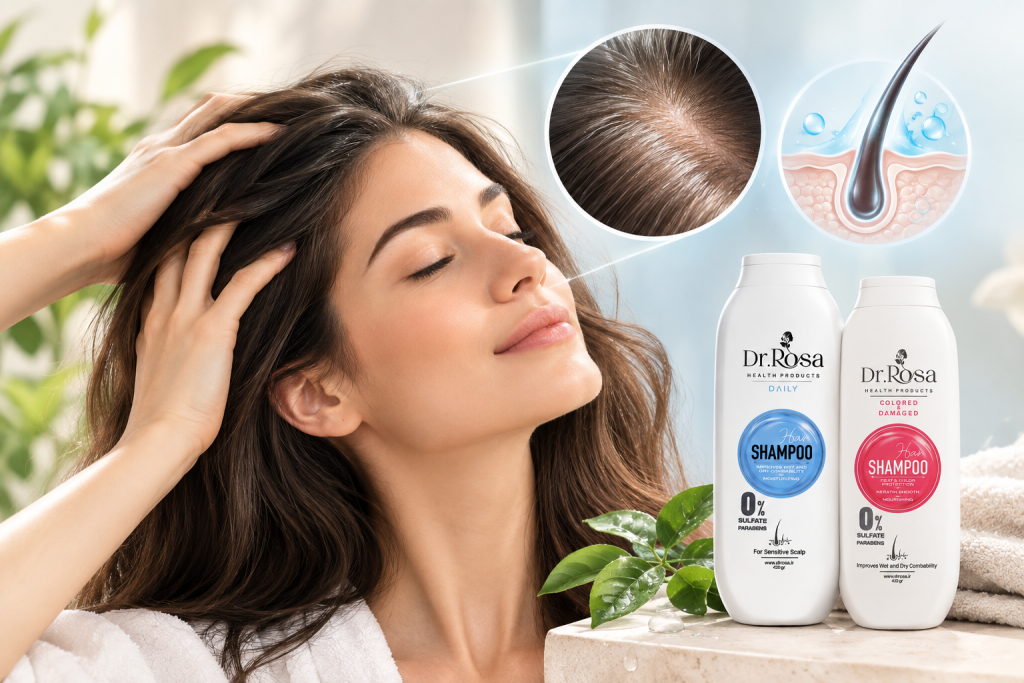
Hair Care Starts at the Scalp
For years, hair care conversations focused mainly on the visible part of the hair.
Shine, smoothness, volume, texture and styling were the primary concerns. The scalp, meanwhile, often received far less attention.
That perspective is changing.
Today, consumers are becoming more aware that scalp health is an important part of modern hair care. Rather than thinking only about how the hair looks after styling, people are paying closer attention to cleansing, moisture, oil balance, buildup and scalp comfort.
This growing approach is sometimes described as the “skinification” of hair care—the idea that scalp care deserves the same thoughtful attention that people have traditionally given to facial skincare.
And it is changing the way people choose shampoos, treatments and daily hair care routines.
Why Scalp Health Matters in Modern Hair Care
The Scalp Is the Foundation of Hair Care
Understanding scalp health is essential because the condition of the scalp can influence how people approach cleansing, moisture, oil balance and everyday hair care.
Cleveland Clinic notes that factors such as hair-care products and washing habits can affect scalp condition.
The scalp is skin, but it has its own characteristics and needs.
It contains sebaceous glands that produce oil, a natural microbiome, hair follicles and a protective barrier. Like other areas of the skin, the scalp can become dry, oily, sensitive or affected by product buildup.
This means that a hair care routine should not focus exclusively on the hair fibre.
The condition of the scalp also deserves consideration.
A routine that cleanses appropriately, manages buildup and respects the scalp’s natural balance can provide a better foundation for everyday hair care.
Hair and Scalp Have Different Needs
One of the most useful changes in modern hair care is recognizing that the hair and scalp are not necessarily asking for the same thing.
Your scalp may need effective cleansing, while your hair lengths may need moisture and conditioning.
Someone with an oily scalp may prefer a different shampoo from someone whose scalp tends to feel dry. Similarly, people who use styling products frequently may need to pay more attention to buildup.
This is why personalized hair care matters.
The Skinification of Hair Care
What Does “Skinification” Actually Mean?
The term refers to the growing influence of skincare concepts on hair and scalp care.
Consumers have become familiar with ingredients, formulations and routines designed around specific skin concerns. That same mindset is now appearing in scalp health and modern hair care.
Instead of simply asking whether a shampoo makes hair feel clean, people may also ask:
- Is it appropriate for my scalp?
- Does it provide gentle cleansing?
- How does it fit into my overall routine?
- Is it designed for oil control or moisture?
- Does it complement other products I use?
- Which ingredients are included in the formula?
This represents a broader shift from simply buying beauty products to making more informed choices.
Ingredients Are Becoming Part of the Conversation
From Generic Products to Targeted Formulations
Modern consumers increasingly want to know what is inside their personal-care products and why certain ingredients are included.
Depending on the formulation and intended use, modern scalp and hair products may incorporate ingredients such as botanical extracts, vitamins, humectants, exfoliating agents or conditioning compounds.
However, an ingredient should not be viewed in isolation.
Its concentration, formulation, combination with other ingredients and intended use all matter.
This is particularly important with ingredients commonly associated with skincare.
Niacinamide
Niacinamide is widely used in skincare and can also appear in scalp-focused formulations. It is commonly associated with supporting the skin barrier and helping manage excess oil.
For consumers interested in scalp care, it represents the growing connection between skincare science and hair care.
Hyaluronic Acid and Humectants
Hyaluronic acid and other humectants are known for their ability to attract and retain moisture.
In hair and scalp products, moisturizing ingredients can be useful when dryness is part of an individual’s personal-care concern.
Peptides
Peptides have become popular in modern beauty formulations because of their role in cosmetic skin and hair products.
Their use reflects a broader trend toward ingredient-focused formulations designed around specific cosmetic goals.
Exfoliating Ingredients
Ingredients such as salicylic acid can be used in certain scalp products to help remove excess buildup and dead skin.
However, exfoliation is not automatically better simply because it is stronger. The right frequency and formulation depend on the individual’s needs.
Scalp Health and the Right Cleansing Balance
Clean Does Not Mean Stripped
One of the most important principles of scalp health is maintaining the right cleansing balance.
The American Academy of Dermatology also recommends adjusting hair-washing practices according to hair type and scalp oiliness.
The scalp needs to be cleansed, but excessive or overly aggressive cleansing may not be appropriate for everyone.
At the same time, insufficient cleansing can allow oils, dead skin and styling-product residue to accumulate.
The right approach depends on factors such as:
- Scalp oiliness
- Hair texture
- Styling habits
- Product use
- Washing frequency
- Environmental conditions
There is no universal washing schedule that works perfectly for everyone.
Why Scalp Care and Hair Growth Should Not Be Confused
Healthy Scalp Care Supports the Bigger Picture
It is tempting to connect every scalp-care product directly to hair growth.
But the reality is more nuanced.
Hair loss can have many possible causes, including genetic, hormonal, nutritional, medical and lifestyle-related factors. A cosmetic shampoo should therefore not be presented as a universal treatment for hair loss.
Good scalp care has a different role.
It can help maintain cleanliness, comfort and an appropriate environment for everyday hair care, while specialized products can address specific cosmetic needs.
When someone experiences sudden, severe or persistent hair loss, professional medical evaluation is more appropriate than relying exclusively on cosmetic products.
The Rise of Personalized Scalp Health Care
Personalized scalp health care recognizes that different people may have different needs depending on oiliness, dryness, sensitivity and product buildup.
One Shampoo Does Not Have to Do Everything
The days when one generic shampoo was expected to meet every possible hair need are gradually disappearing.
People are increasingly looking for products designed around specific concerns.
A routine might include a shampoo focused on gentle cleansing, a conditioner designed for moisture, a treatment for specific cosmetic needs and additional scalp care when appropriate.
This does not mean everyone needs a complicated multi-step system.
In fact, personalization often means using fewer, more appropriate products.
Dr. Rosa and the Modern Approach to Scalp Care
Specialized Hair Care with a Purpose
Dr. Rosa approaches hair care through the concept of specialized care—recognizing that different hair types and everyday concerns can require different solutions.
Its range of specialized shampoos is developed with attention to different aspects of hair and scalp care, incorporating modern formulation approaches alongside selected botanical ingredients and vitamins.
The philosophy is straightforward: instead of treating hair care as a generic routine, choose products based on what your hair and scalp actually need.
From Cleansing to Complete Care
A shampoo is an important part of a hair care routine, but it does not have to be the entire routine.
A more complete approach may involve:
- Appropriate cleansing
- Conditioning based on hair needs
- Scalp-focused care when required
- Protection from excessive heat and styling stress
- Consistent maintenance
- Professional guidance when concerns go beyond cosmetic care
This approach makes hair care more intentional without making it unnecessarily complicated.
Building a Modern Scalp-Focused Routine
Step 1: Understand Your Scalp
Start by identifying whether your scalp tends to be oily, dry, sensitive or prone to buildup.
Step 2: Choose the Right Cleanser
Select a shampoo based on your scalp and hair needs rather than choosing one simply because it is popular.
Step 3: Care for the Hair Lengths
Remember that the scalp and hair fiber have different needs. Conditioning products can help maintain softness and manageability through the lengths.
Step 4: Avoid Unnecessary Overprocessing
Frequent heat styling, aggressive brushing and repeated chemical treatments can place additional stress on the hair.
Step 5: Stay Consistent
A good routine is not necessarily the most complicated one. Consistency is often more useful than constantly switching between products.
The Bigger Change in Hair Care
From Appearance to Overall Hair Wellness
The modern hair care conversation is becoming broader.
Instead of asking only:
“How can I make my hair look better today?”
Consumers are increasingly asking:
“How can I take better care of my hair and scalp over time?”
That change represents a deeper understanding of personal care.
Hair appearance still matters, of course. But appearance and care do not have to be separate concepts.
Softness, manageability, shine and volume can all be part of a routine that also pays attention to the scalp.
Final Thoughts: Start at the Root
The scalp may have been overlooked for years, but it is becoming an increasingly important part of modern hair care.
The rise of scalp-focused products, ingredient-conscious consumers and more personalized routines reflects a simple idea: effective hair care begins with understanding individual needs.
Dr. Rosa’s focus on specialized shampoos fits naturally into this evolving approach, where hair care is not simply about appearance but also about thoughtful, consistent care.
There is no universal formula for great hair.
The better approach is to understand your scalp, understand your hair and choose products that make sense for your individual routine.
Because sometimes, better hair care does not begin with what you see in the mirror.
It begins at the root.
Dr. Rosa started with a focus on advancing hair care; however, with the advancement of science, technology, and innovations in beauty and hair health, Dr. Rosa has expanded its focus to explore all areas of modern hair care, developing quality products and sharing valuable knowledge that supports healthier and more beautiful hair for people around the globe
5700 Yonge St, North York, Ontario, Canada
+1 647-200-4442
info@drrosa.ca
©Copyright 2024 - 2027 by Famplast Inc. All Rights Reserved
Dr. Rosa started with a focus on advancing hair care; however, with the advancement of science, technology, and innovations in beauty and hair health, Dr. Rosa has expanded its focus to explore all areas of modern hair care, developing quality products and sharing valuable knowledge that supports healthier and more beautiful hair for people around the globe
5700 Yonge St, North York, Ontario, Canada
info@drrosa.ca
+1 647-200-4442